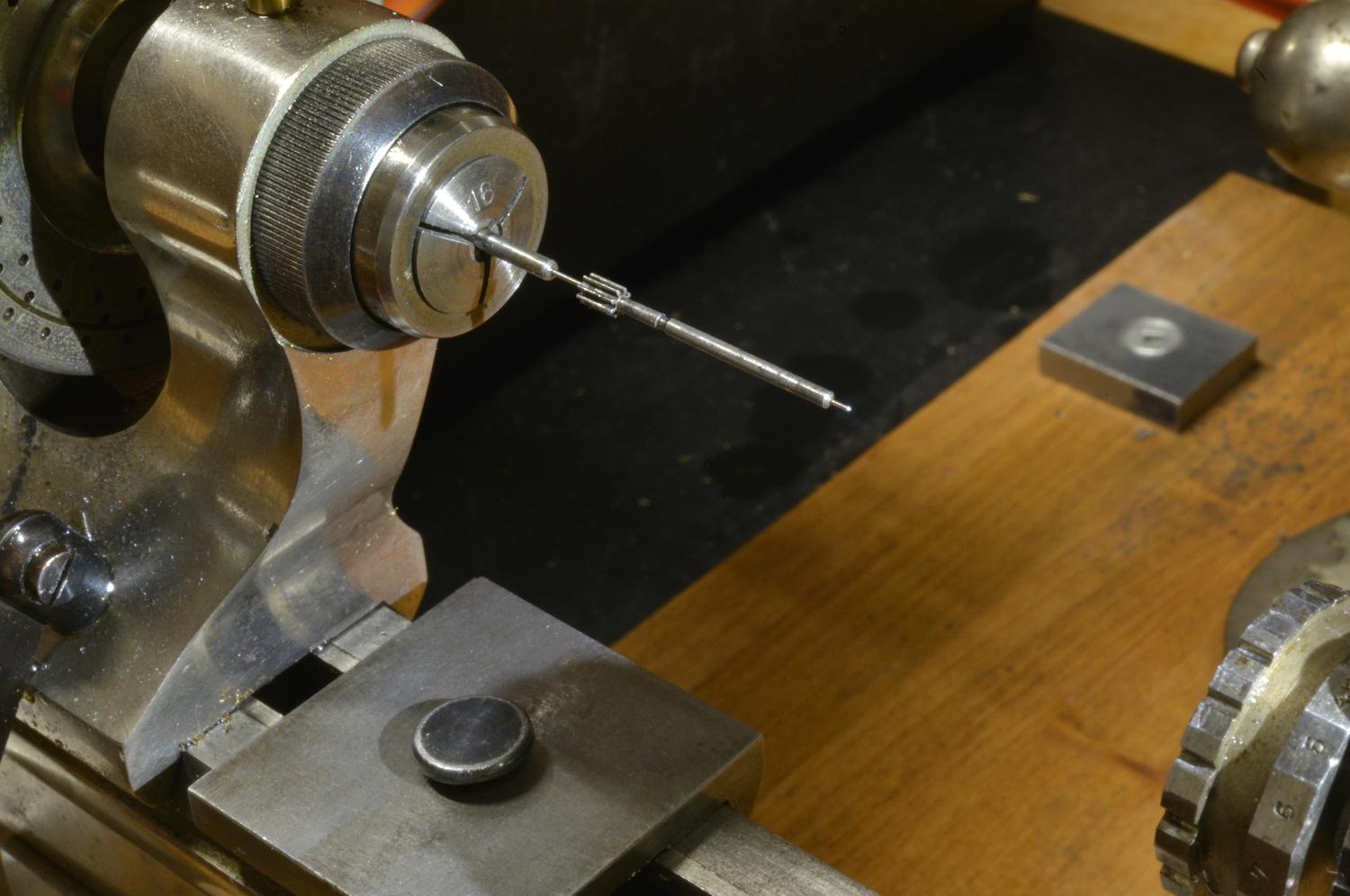
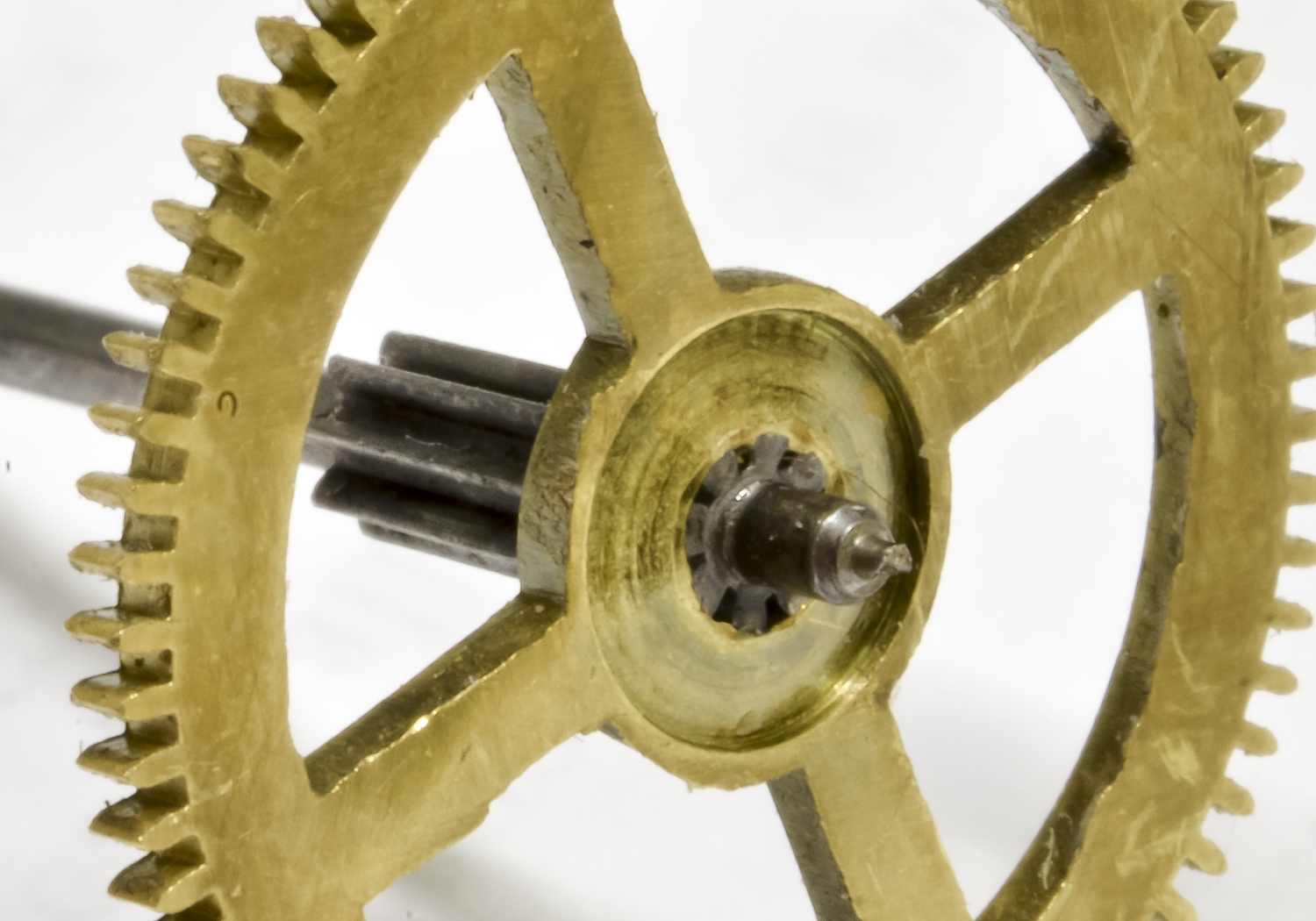
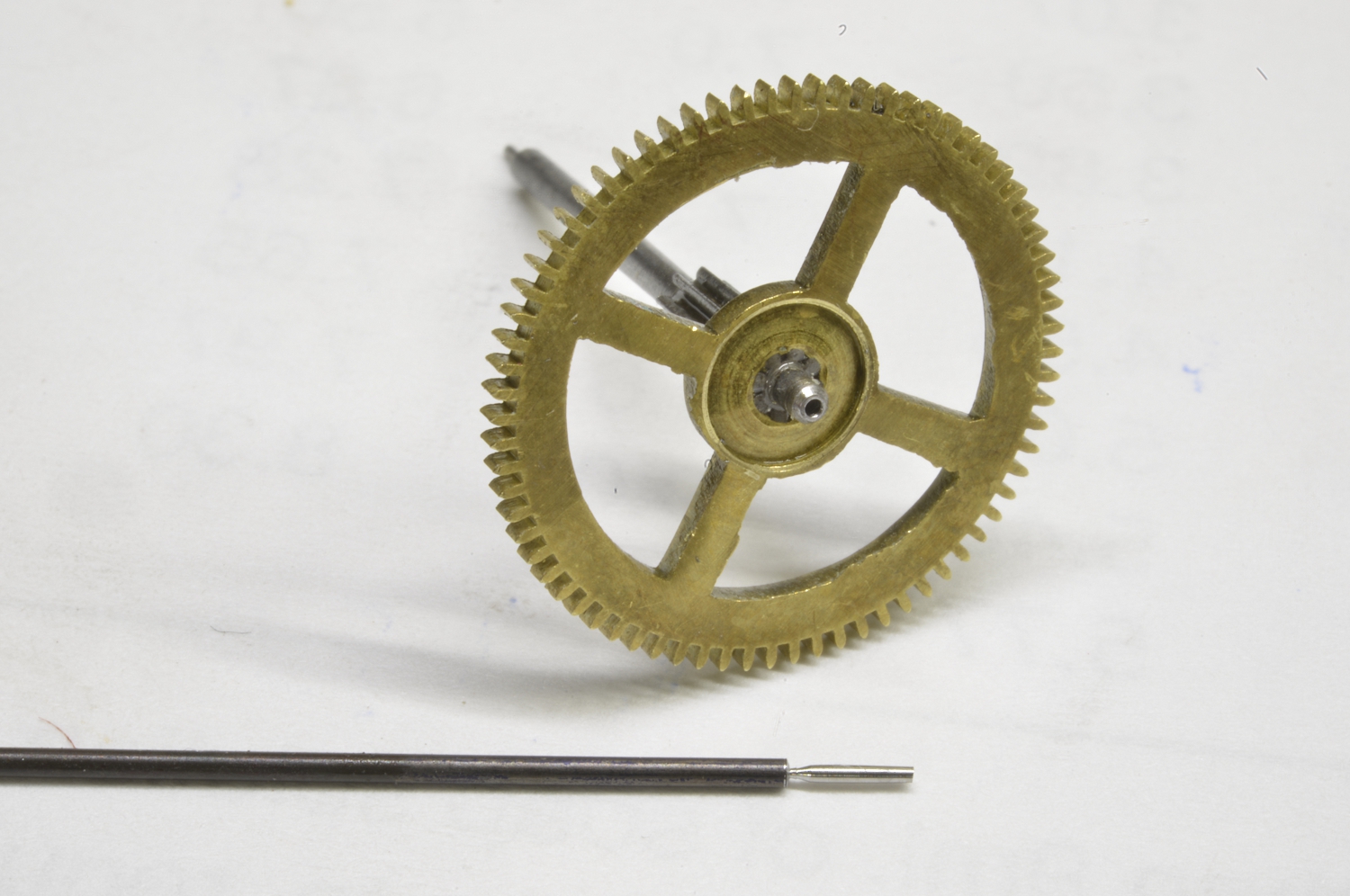
Here’s a little repair for a neat old 3 weight clock. The pivot on the fly arbour and also one on the connecting wheel was broken. The fly is kind of a governor that spins in the air and uses air resistance to regulate the speed of the strike mechanism – e.g. if the clock is to ring 5 times at 5 o’clock, you want the five strikes equally spaced.
The way most shafts or arbours work in a clocks and watches is there is a small section on the end called a pivot (what you might a journal bearing on say a crankshaft) that rides in a hole in the clock plate.
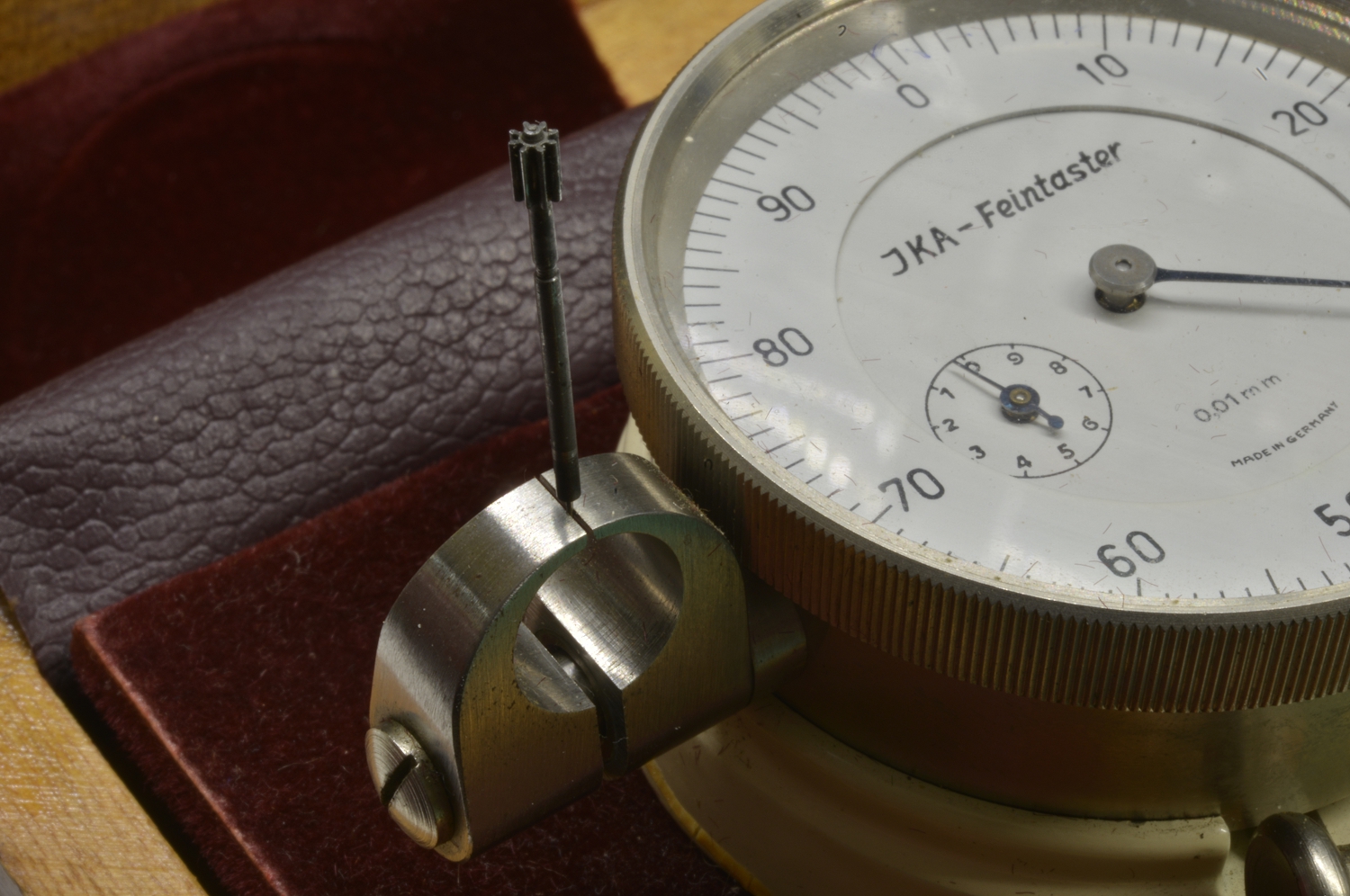
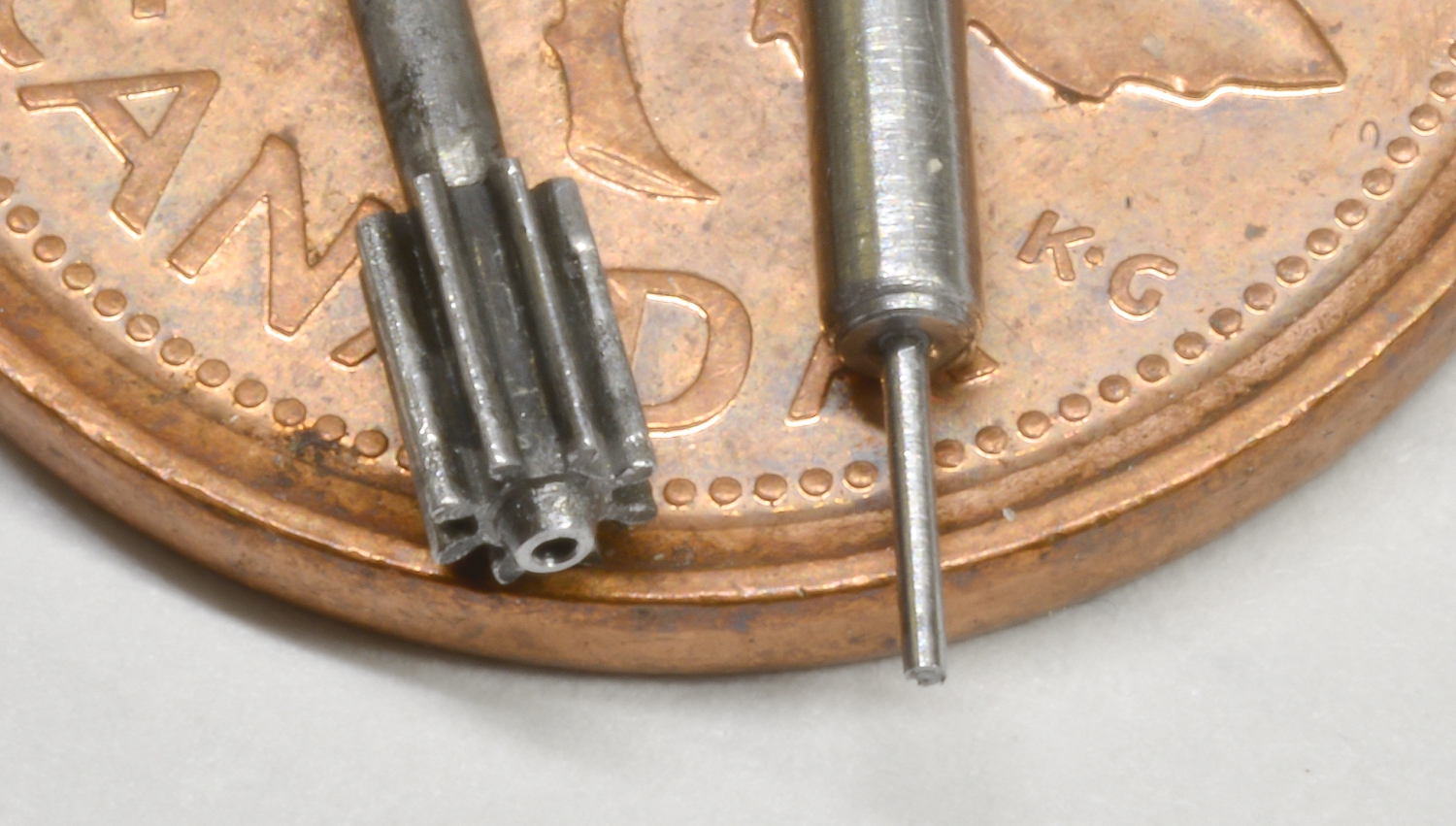
They can be very small (pivots in watches are smaller still, this one was 0.35mm or about 0.13″) and they break.
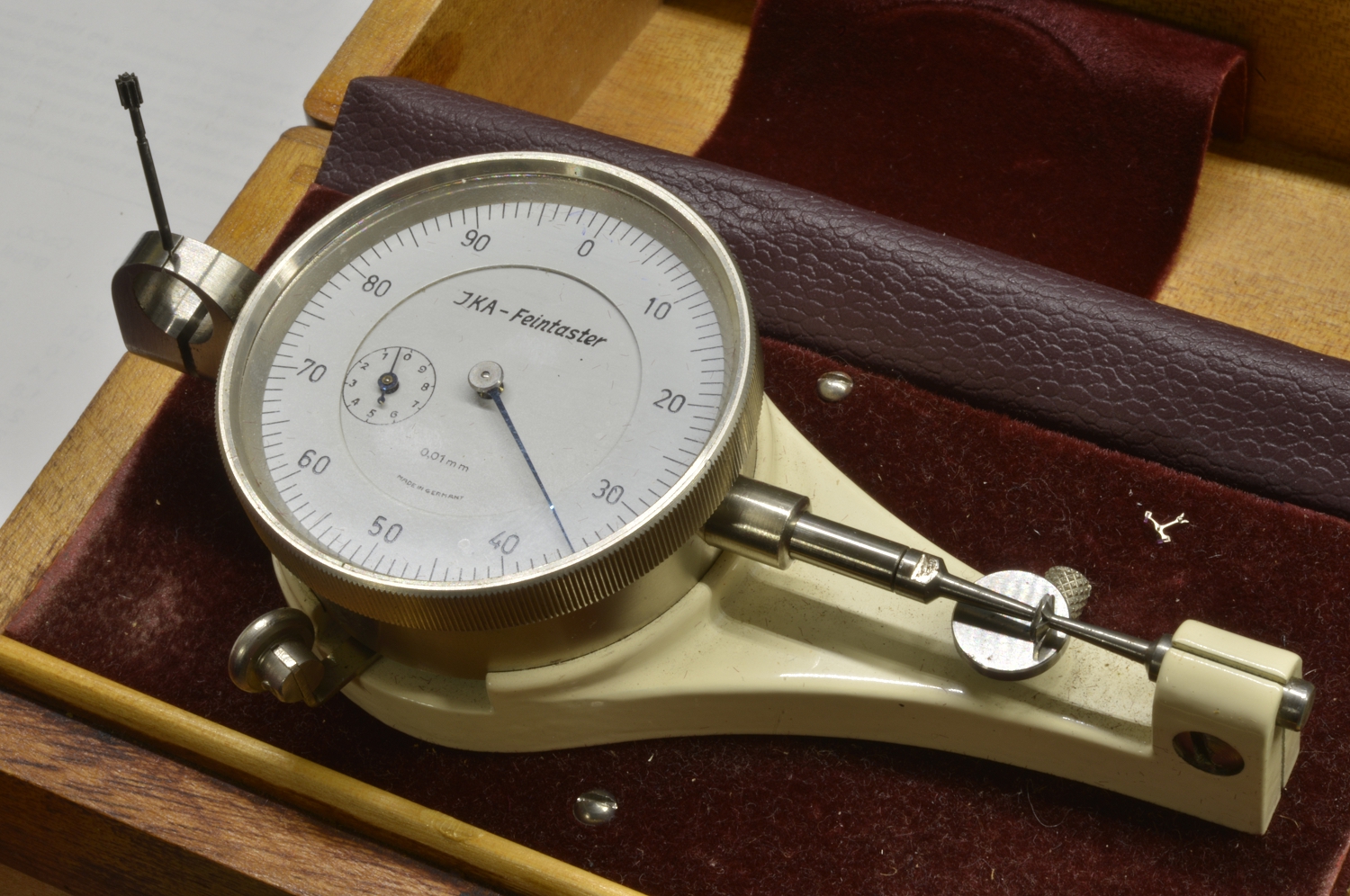
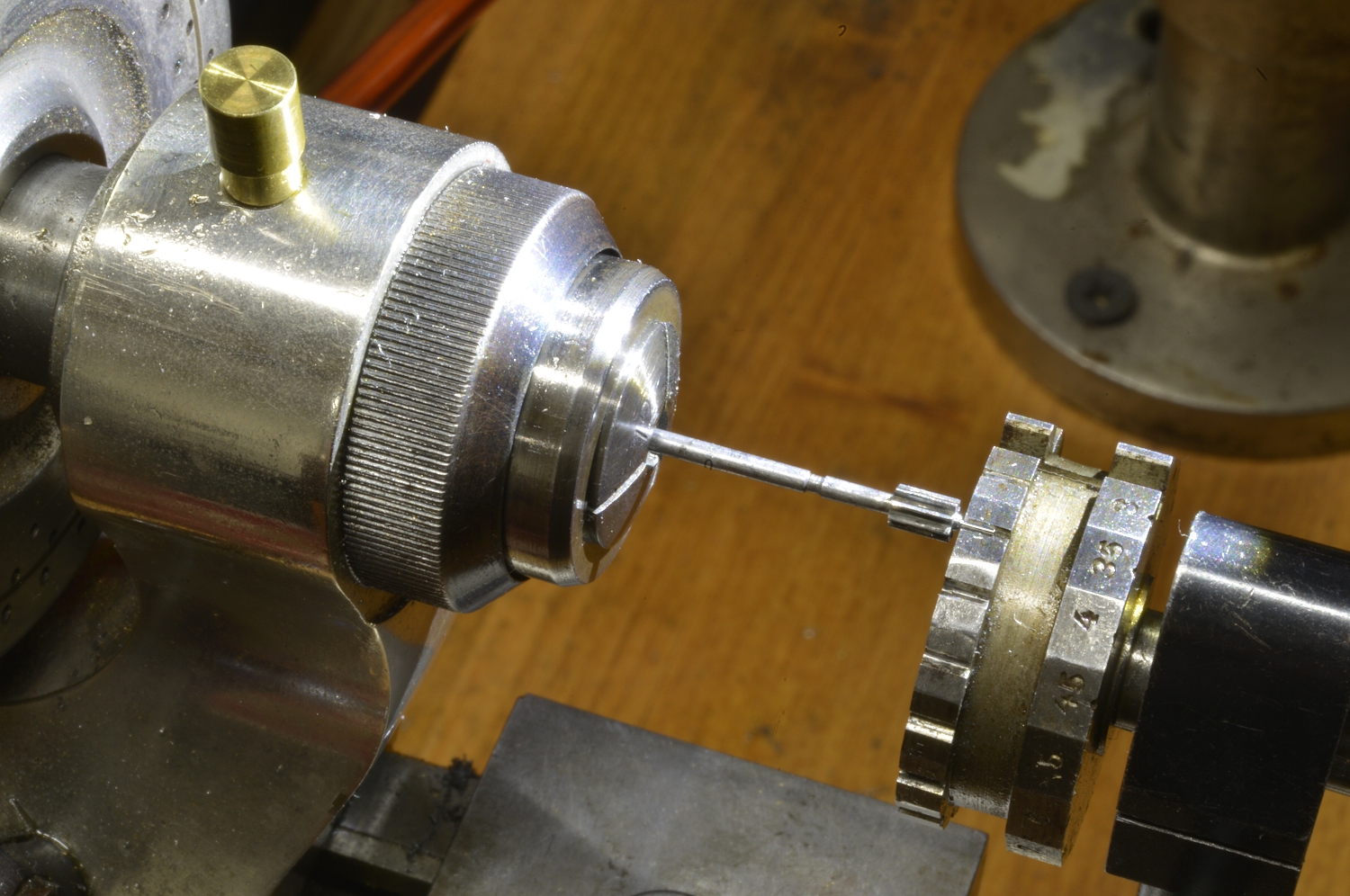
The measuring tool if you are not familiar is the wonderful Feintaster. A lever moves an indicator plunger that has a stage and special anvils on one end and a caliper jaw arrangement on the other.
I’d planned on making a version, until a reasonably priced model came up locally….still, it would make an excellent home shop project
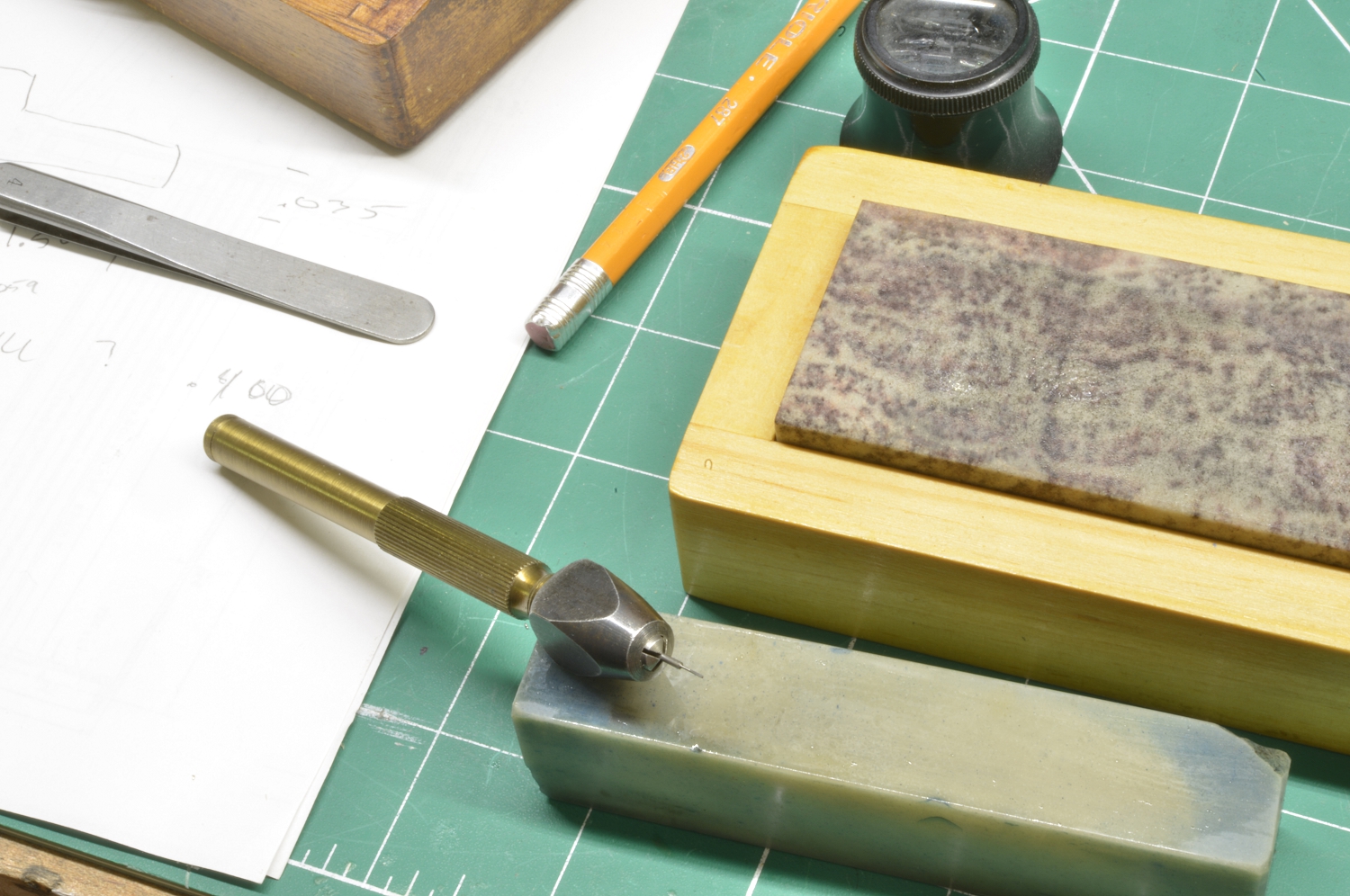
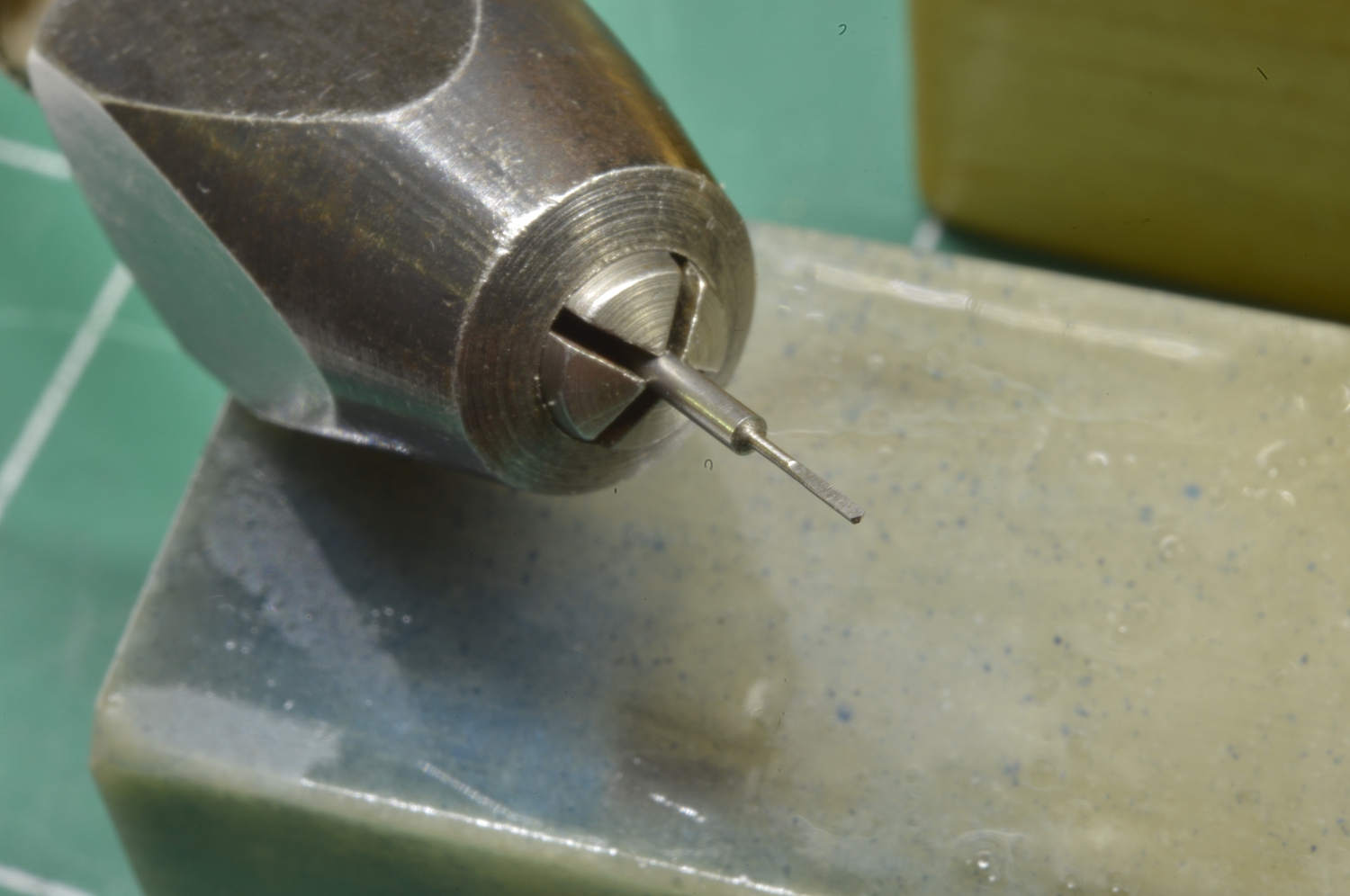
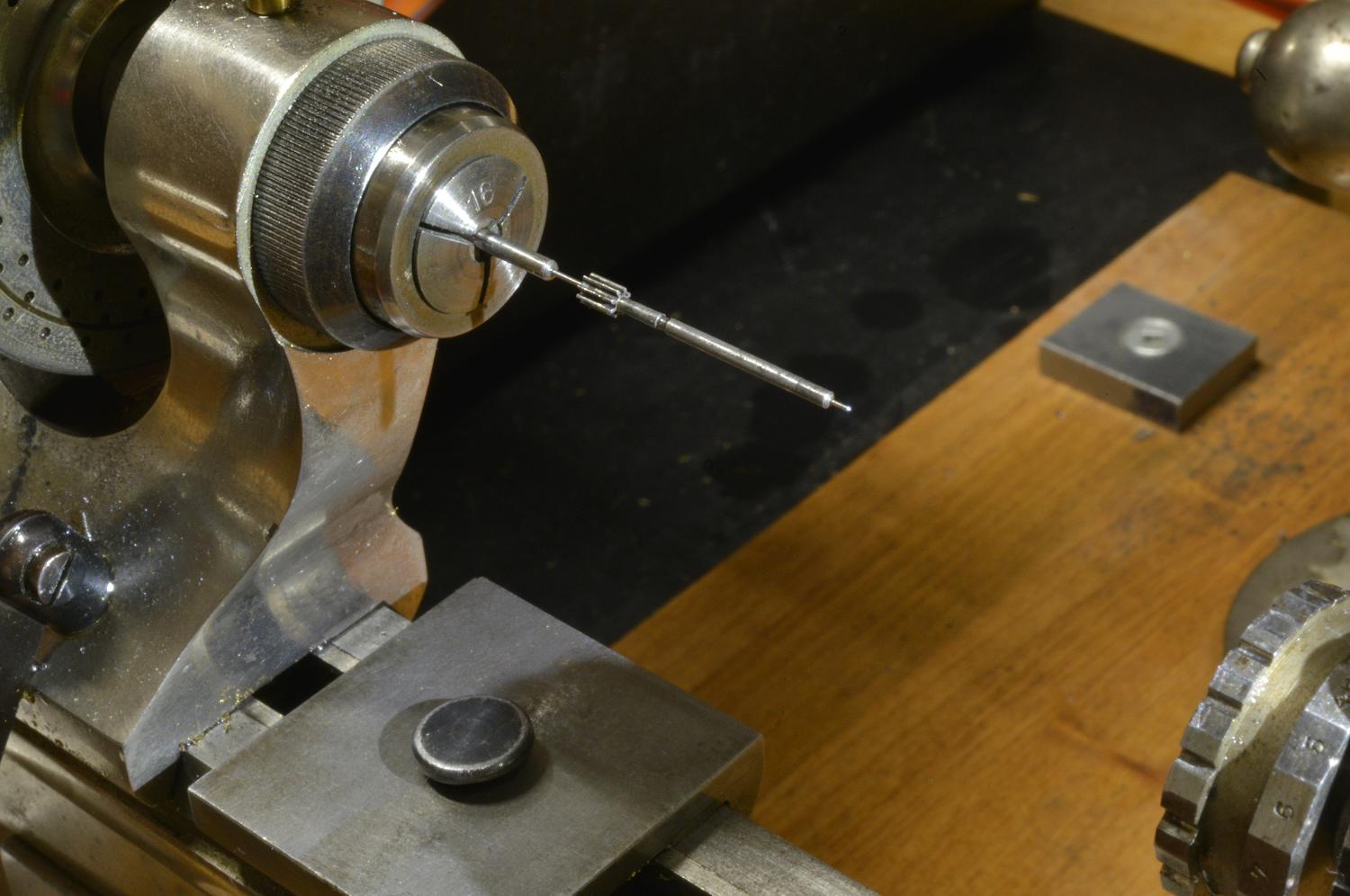
The process is to drill out arbor and install a very close fitting replacement made from blue tempered carbon steel. First step is to sharpen a drill
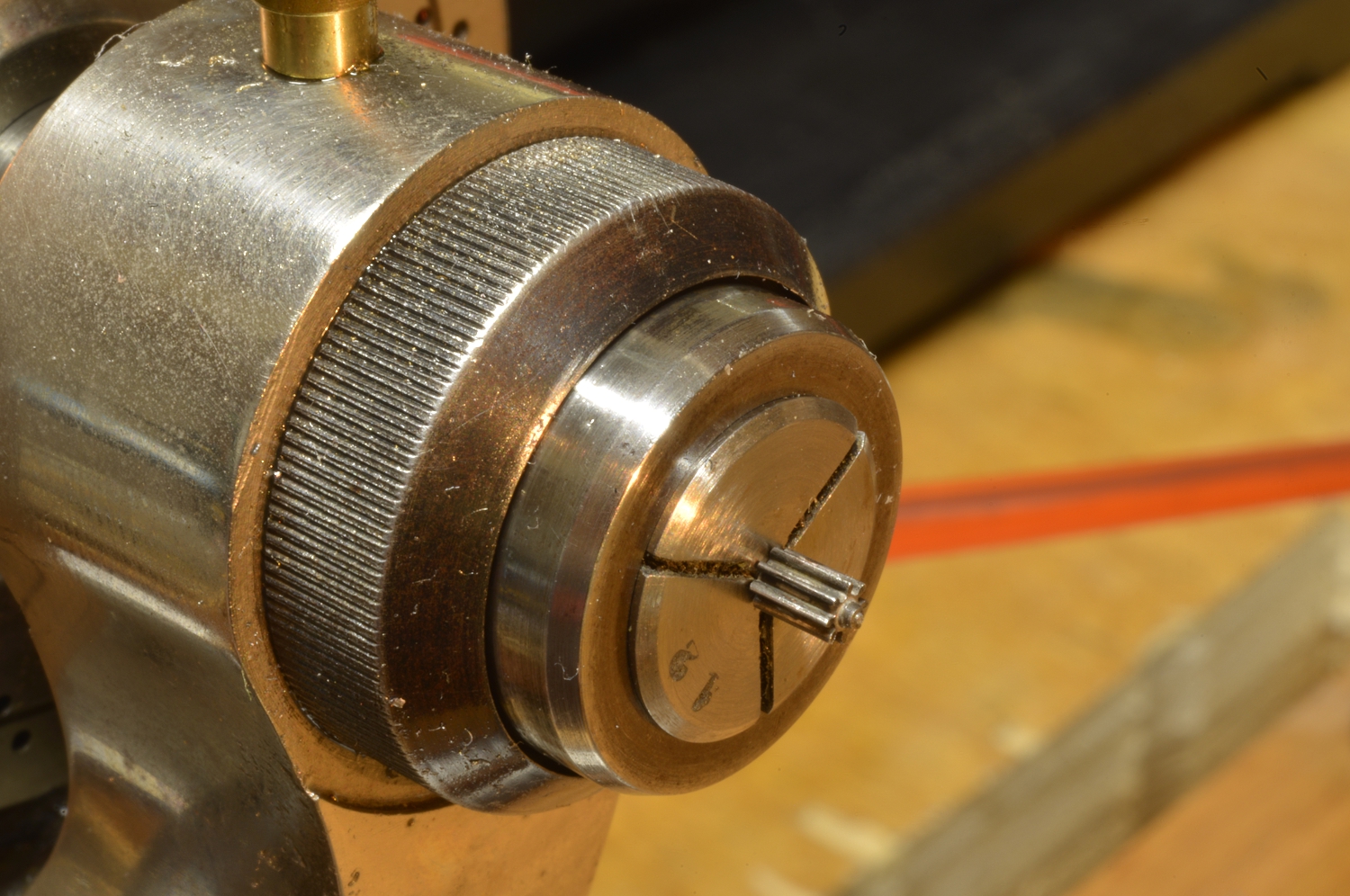
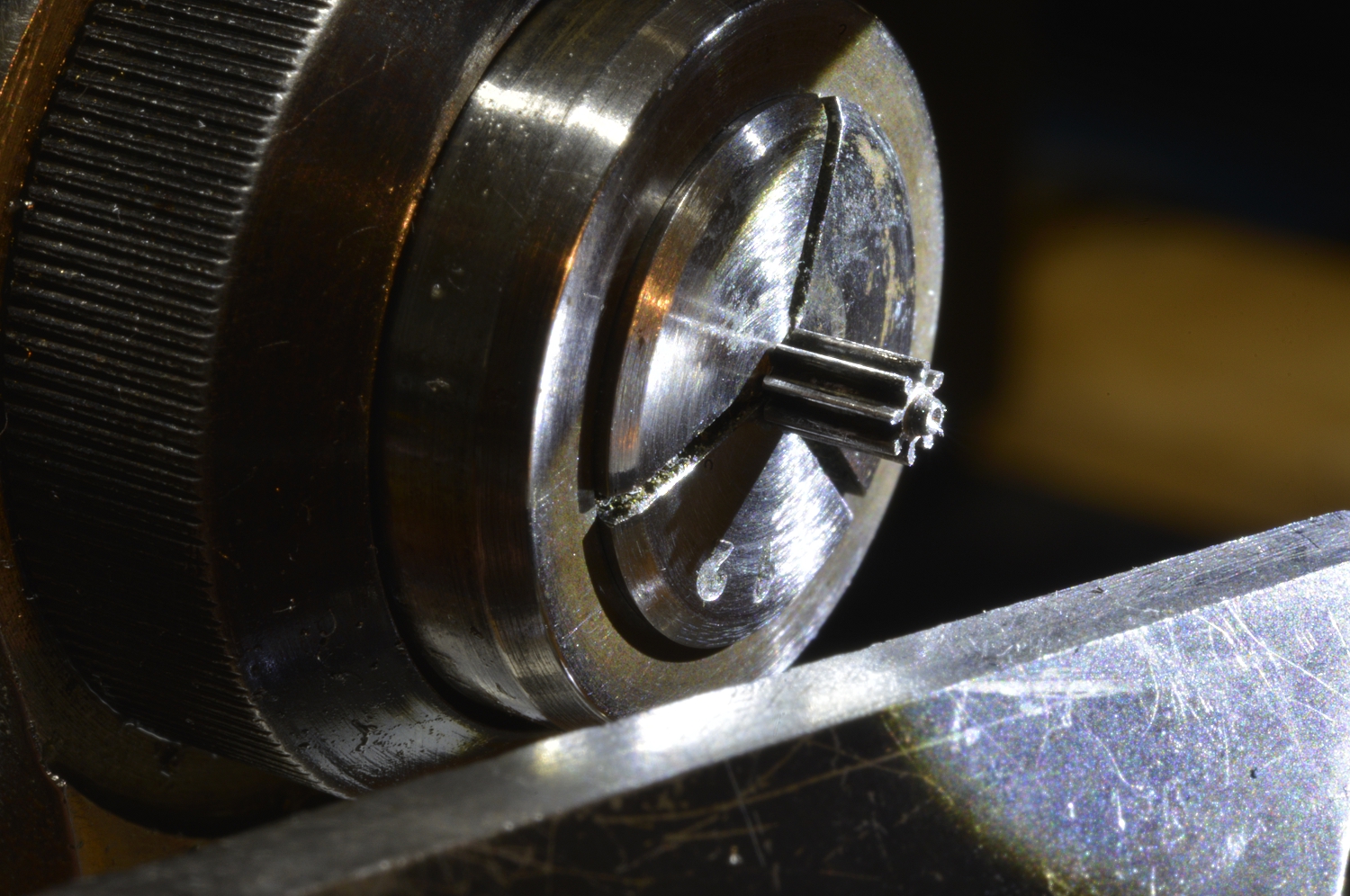
Using a graver (hand tool) clean up the end and make a small conical centre spot for the drill to start.
This is best way to start these small holes.
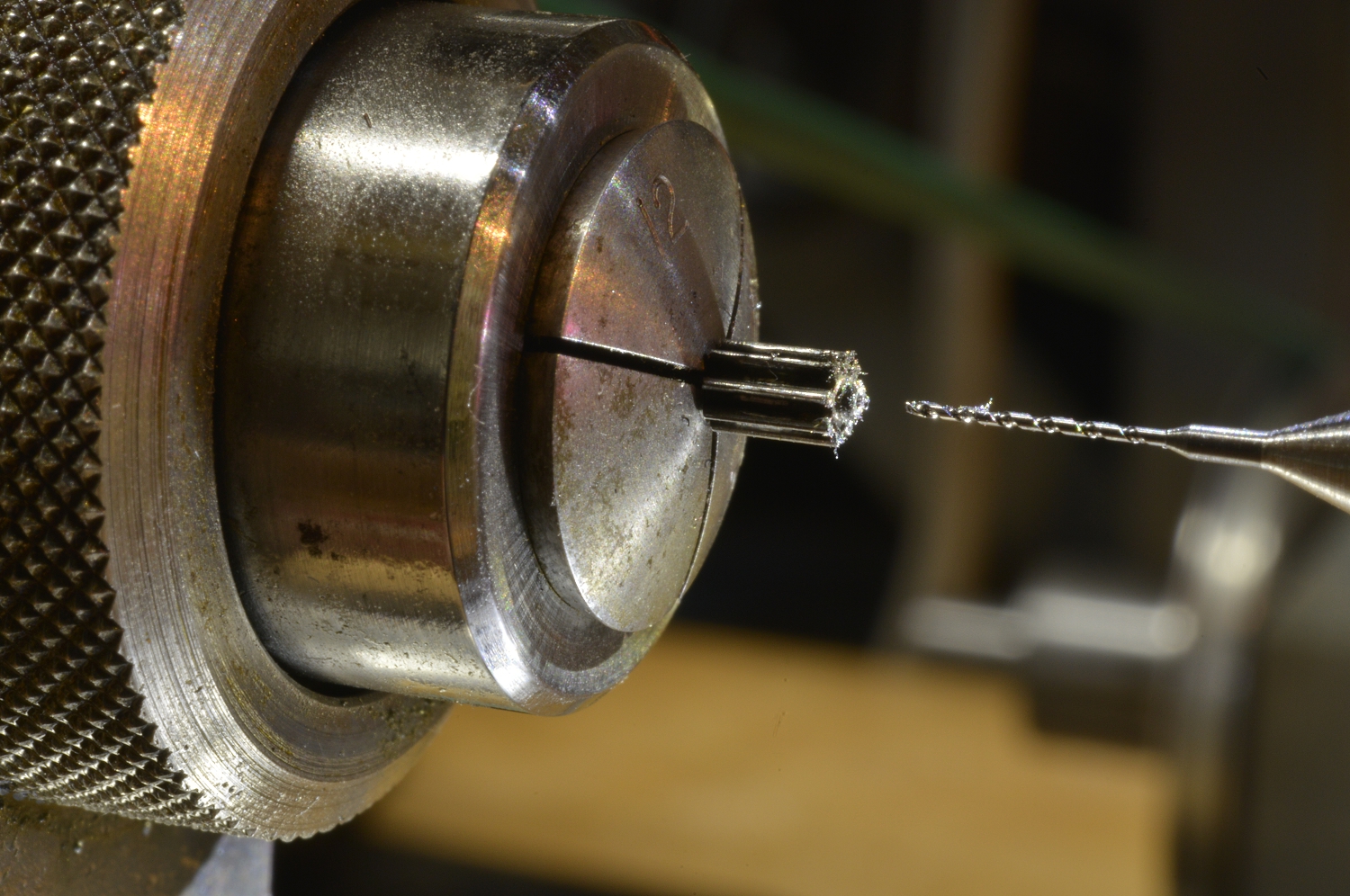
drill out for the new pivot – I switch to a carbide drill, it eats through what may be a hardened and tempered bit of steel
Turning the testing pivot from blue tempered tool steel.
All work is done of course with a hand graver
Fits in horology can be challenging as the dimensions are so small.
A convenient way to deal with this is to turn slight tapers. Test the pivot and when it just starts to go in, that is the diameter you need.
A slide rest does not provide the fine control and ability to turn these tapers that a graver used under magnification provides.
Lorem ipsum dolor sit amet, consectetur adipiscing elit. Ut elit tellus, luctus nec ullamcorper mattis, pulvinar dapibus leo.
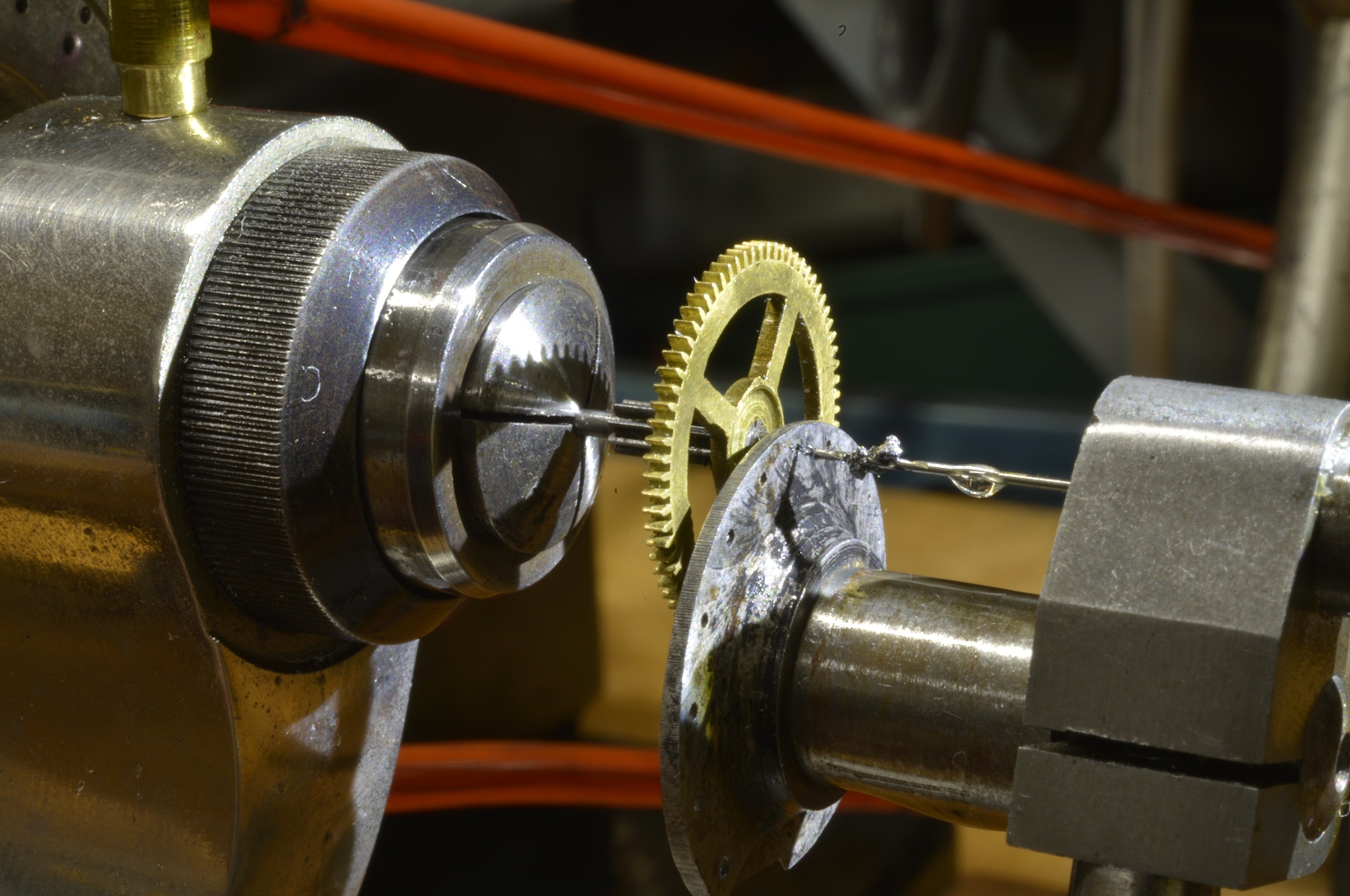
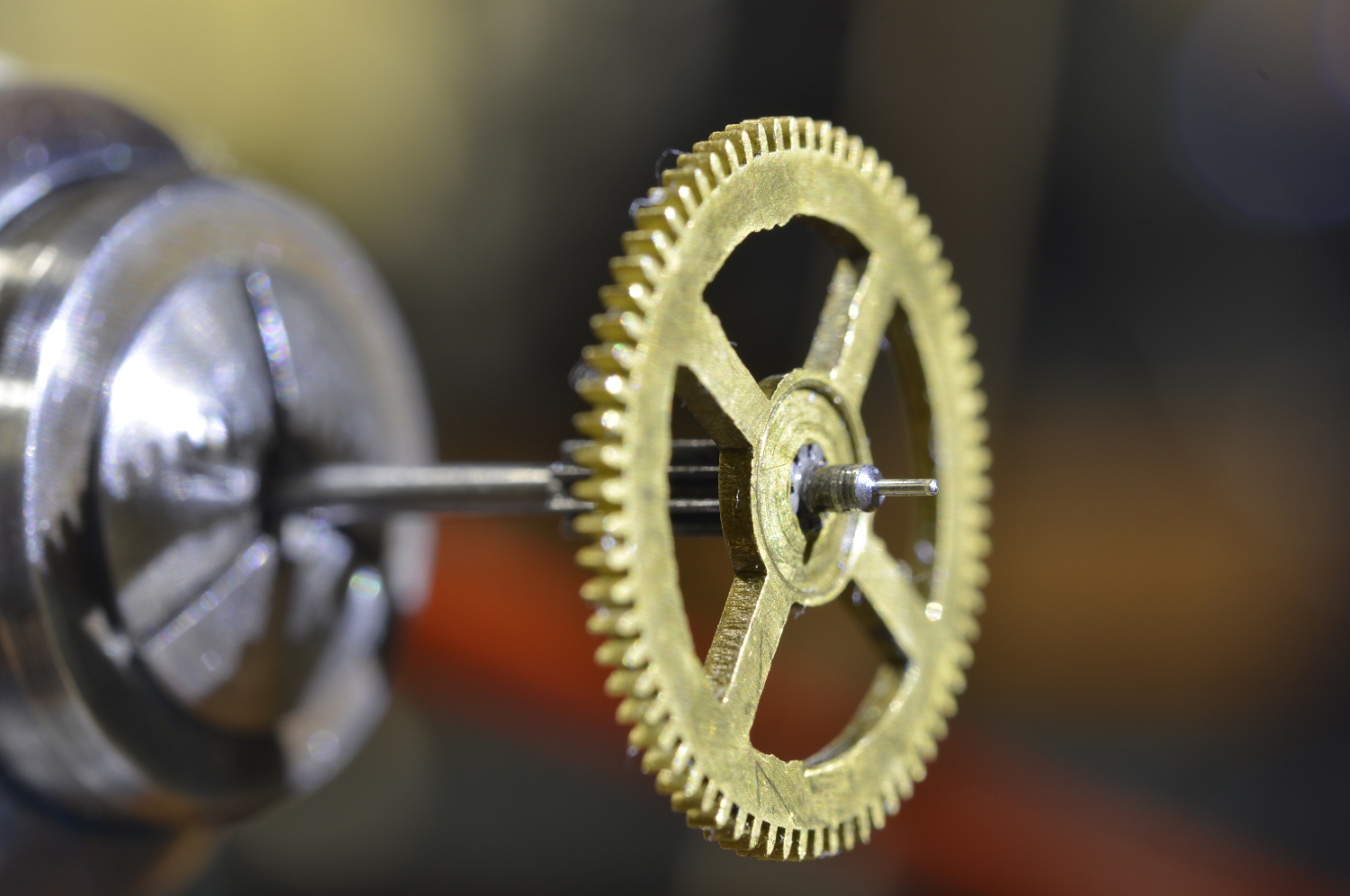
I used the lathe to insert the pivot. I have also turn away a bit of steel to make it easier to break off afterward
One concession to modern technology is to use cylindrical locking compound. Concentricity however must still be ensured by well fit components
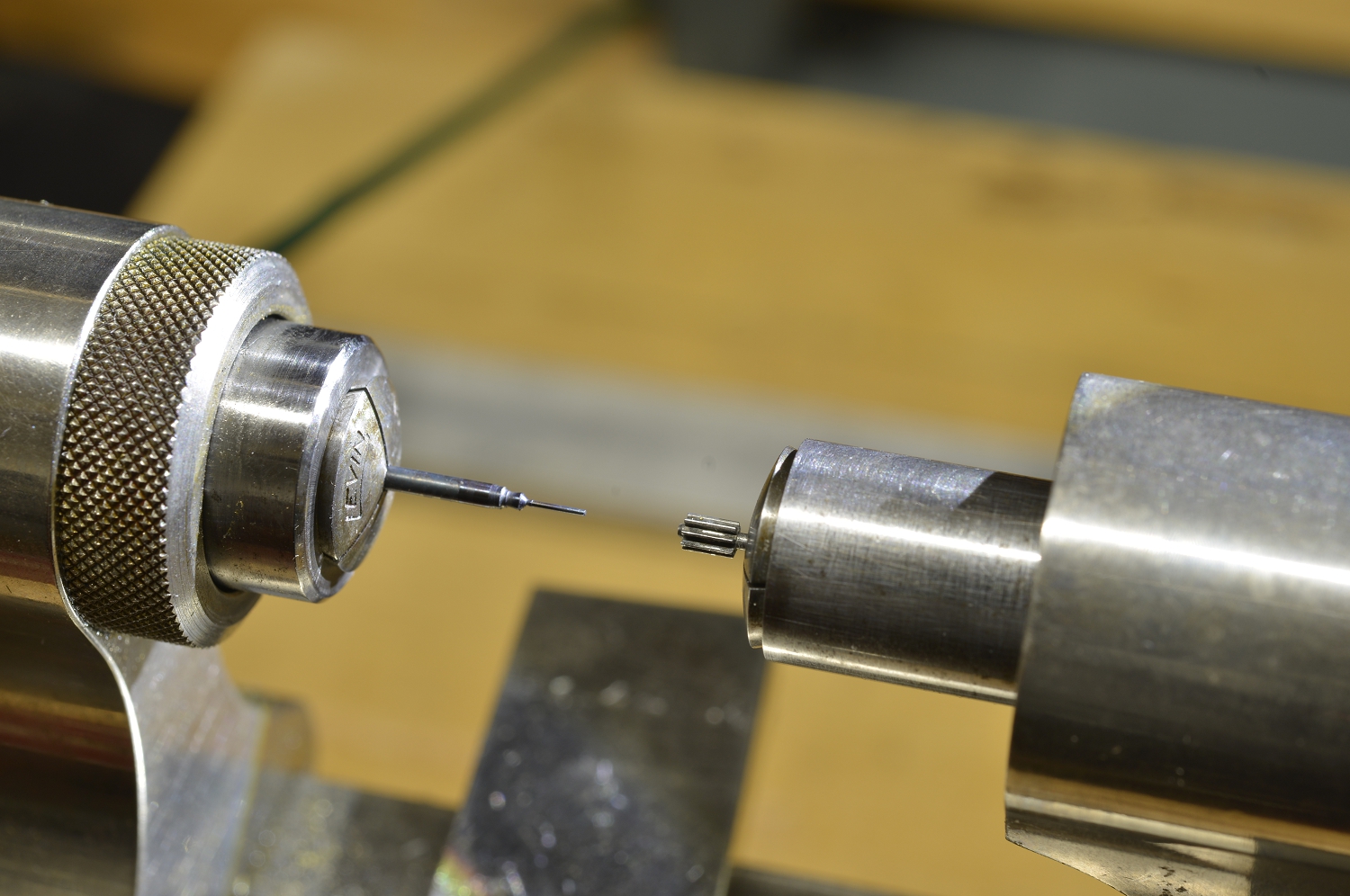
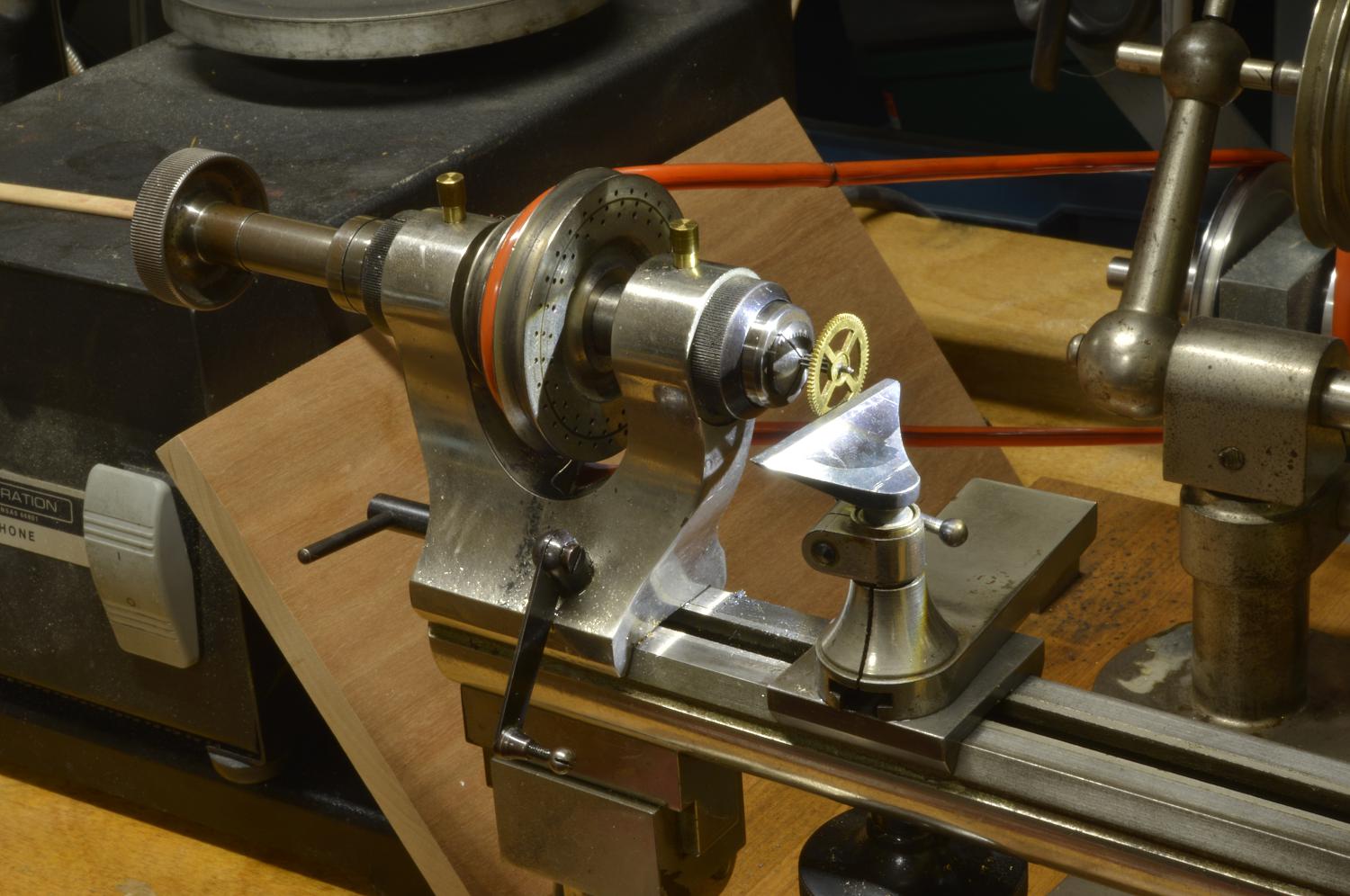
Every pivot needs to br burnished and polished. This special attachment, held in the tailstock, makes this easy as it supports the delicate pivot
To keep the fun going, here is another broken pivot on the same clock
The end of the abor is cleaned up with a graver
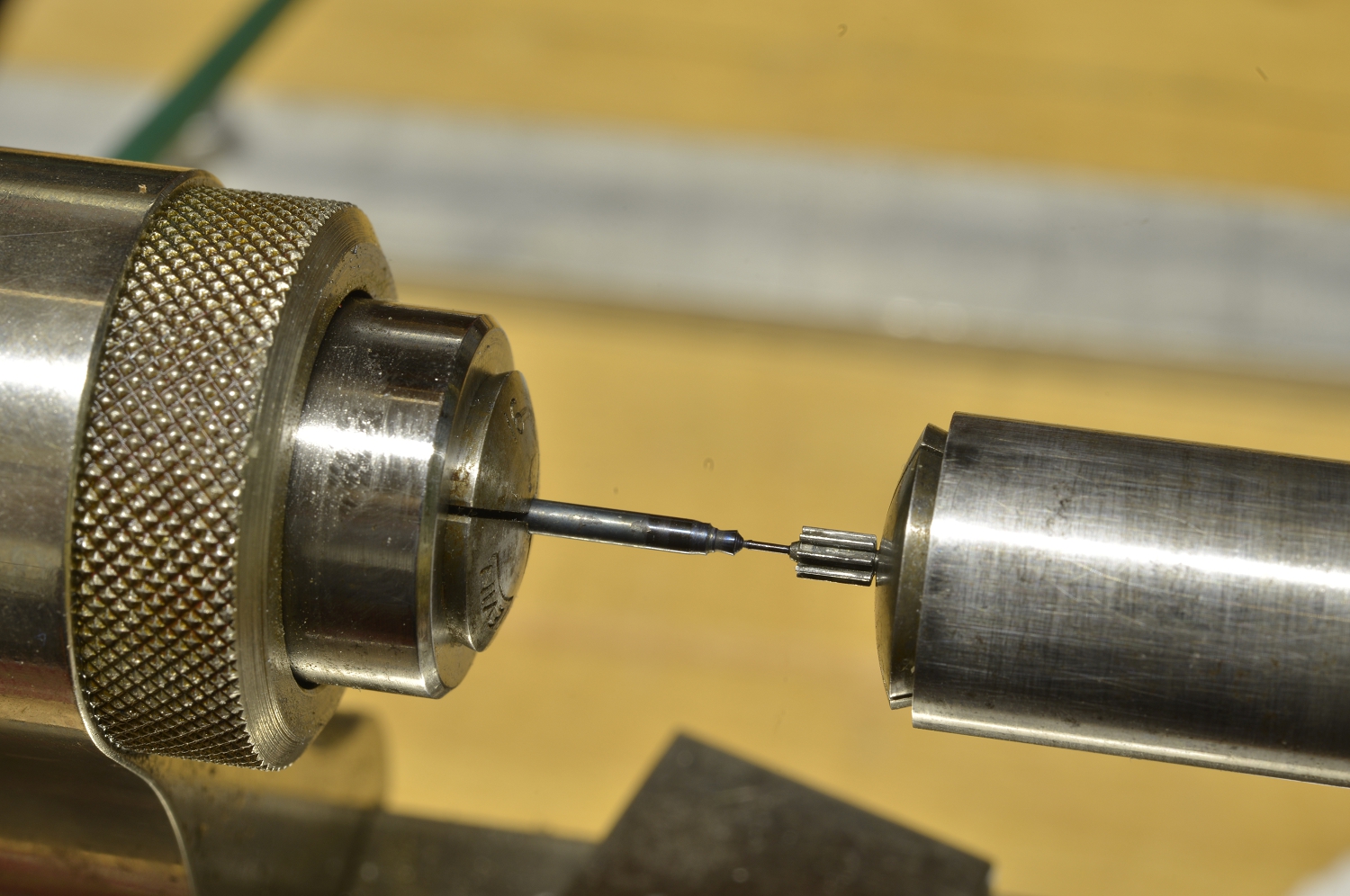
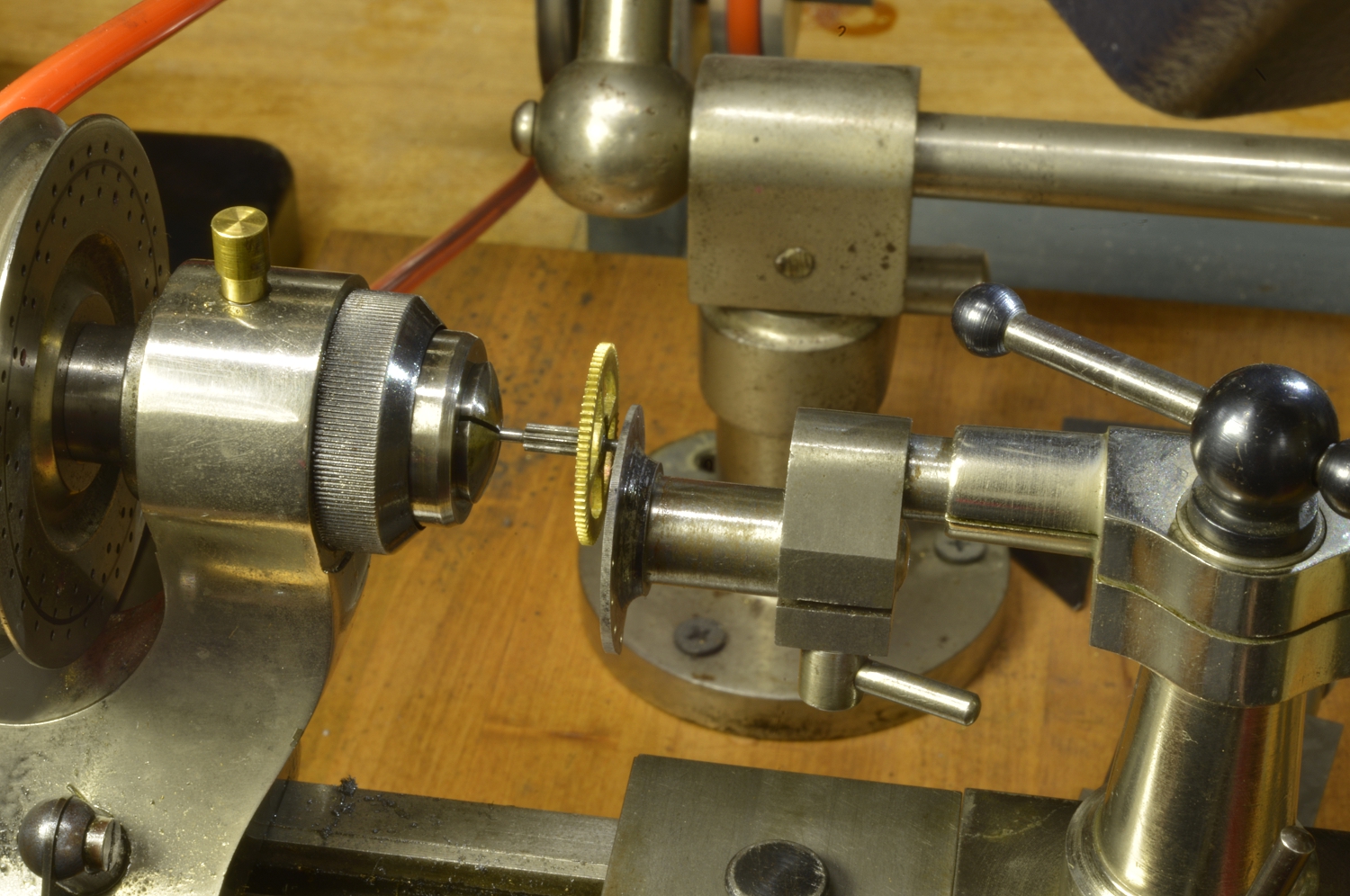
This time I’m going to use a pivot drilling attachement. It essentially acts as a steady rest holding, via a countersink in the plate, the end of the arbor
Held in a runner passing through the tailstock, the drill is guided by a through hole in the plate.
With some care to match the drill size to the guide, you get perfectly centred holes
The new pivot is turned
after insertion, the pivot is burnished and polished using the burnishing support